What if the best preparation for Kilimanjaro isn’t simply getting fitter, but learning how to pace yourself across several demanding days? If you’re wondering how to prepare for Kilimanjaro trek, you’re right to think beyond workouts. Fitness helps you keep moving, but it can’t predict how your body will respond to altitude, and practical details matter when you’re preparing for a guided mountain journey.
This guide will help you build a realistic plan without turning preparation into another expedition. You’ll learn how to develop hiking endurance and strength, why gradual pacing and altitude awareness matter, and what to organise for your health, travel, and kit. We’ll also cover when to seek individual medical advice, so you can prepare with care rather than guesswork. Take it step by step: steady training, thoughtful planning, and an honest understanding of your own needs can help you arrive ready for the challenge ahead.
Key Takeaways
- Learn how to prepare for Kilimanjaro trek with a gradual plan that builds from regular walks to longer outings on varied terrain.
- Strengthen endurance, leg stability, and balance to better handle consecutive days on the trail.
- Understand why fitness and past hiking experience can’t predict how your body will respond to altitude, and when to speak with a qualified clinician.
- Use a reverse timeline to organise health appointments, travel checks, training, and equipment tests before departure.
- Explore how the Machame, Lemosho, Marangu, Shira, and Northern Circuit routes can fit into your preparation plans.
What preparing for a Kilimanjaro trek really involves
Preparation is more than building stamina before departure. It means conditioning your body for repeated walking, planning for your health, understanding that altitude can affect people differently, and getting practical details in order. Each part supports the others: fitness can help you manage the trail, but it can’t tell you how you’ll respond to altitude or replace thoughtful planning.
In brief: Preparing for a Kilimanjaro trek means gradually building walking endurance, planning for health and altitude, and organising the equipment and travel details needed for several days on the mountain.
Think beyond one long hike. On a guided trek, you walk on successive days, with time to rest and recover between them. A measured pace, attention to how you feel, and readiness for changing conditions are more useful than trying to prove your fitness by pushing hard every day.
What makes a Kilimanjaro trek a distinct challenge?
The trail brings together repeated hiking days, uneven ground, and changing conditions. You don’t need to prepare as though you’re training for technical rock climbing: Kilimanjaro is generally approached as a trek rather than a technical climb. Still, a steady walking pace and the ability to keep going when tired matter over a multi-day journey.
The summit attempt can feel more demanding than routine trail days because it comes after days of walking and takes place at higher altitude. Altitude responses vary, even among people with strong fitness or plenty of hiking experience. The Mount Kilimanjaro Wikipedia page offers background on the mountain, its routes, and altitude-related risks, but personal response can’t be predicted from fitness alone.
How should your chosen itinerary shape preparation?
Your route and itinerary length shape the trek’s rhythm: how many days you’ll be walking, how effort and rest are arranged, and how you’ll experience the journey. African Hiking Tours And Safaris offers guided Kilimanjaro itineraries ranging from 6 to 9 days. That range describes the available trip lengths, not a promise that one duration suits everyone or guarantees acclimatisation or a summit.
Use your chosen itinerary to make training more relevant. Practise walking on consecutive days when you can, and include varied terrain rather than relying only on flat, short outings. This helps you notice how your body responds to repeated effort and gives you a chance to practise a comfortable pace. Build in recovery, too; preparation should be steady, not a last-minute test of willpower.
- Conditioning: Build walking endurance and get comfortable spending time on your feet.
- Health planning: Consider your health history and prepare questions for a qualified clinician.
- Altitude awareness: Learn to pay attention to how you feel, without assuming fitness predicts your response.
- Practical readiness: Allow time to organise travel details and test your equipment before departure.
Keep the aim realistic: arrive ready to walk patiently, rest when the itinerary allows, and stay attentive to changing conditions. Preparation can strengthen your readiness for the journey, but no training plan or itinerary can guarantee how your body will respond on the mountain.
How to build fitness for a Kilimanjaro trek
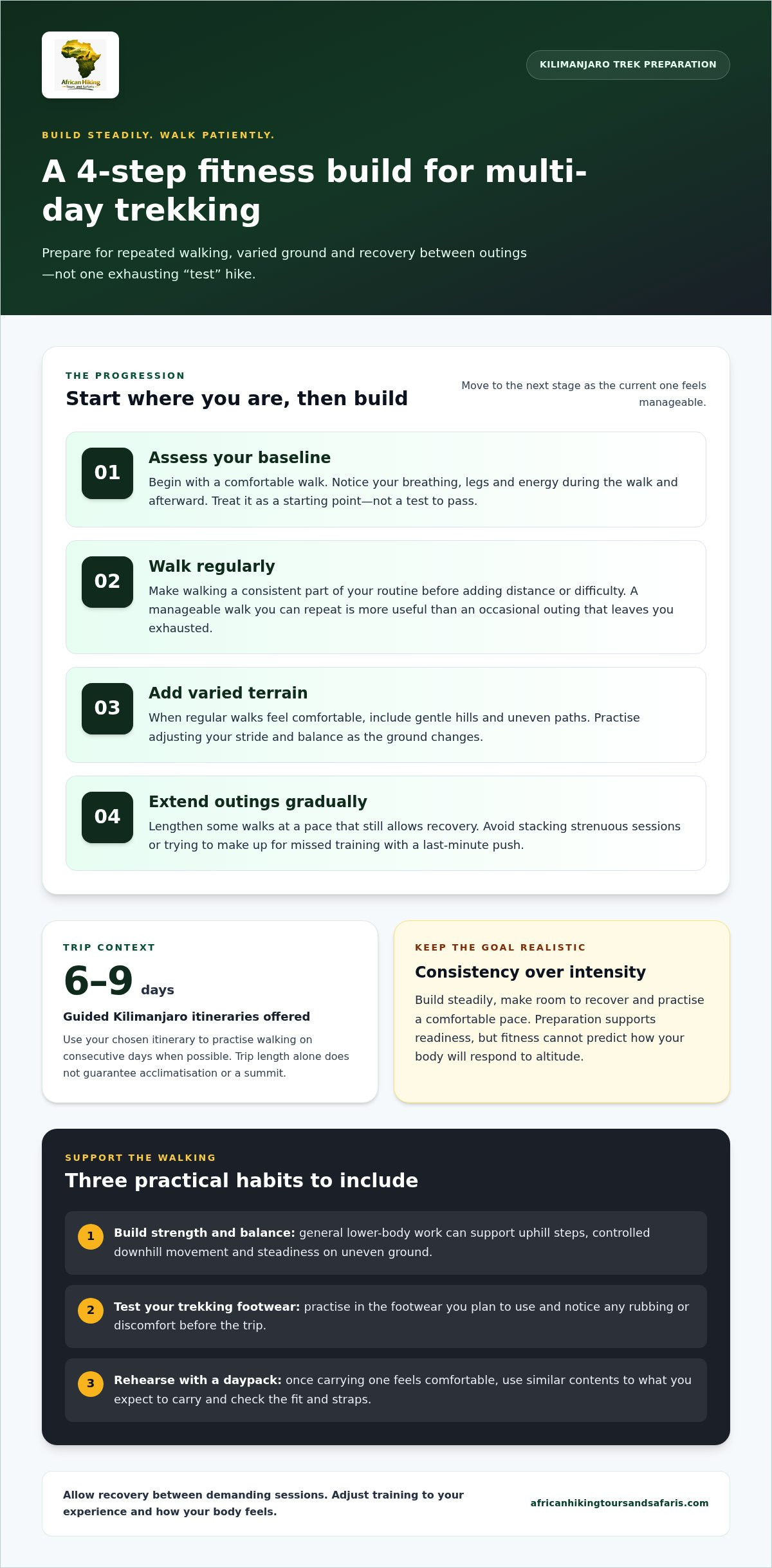
Build your trekking fitness gradually, starting from what you can comfortably manage now. The goal isn’t to become a runner or train for a single heroic hike. It’s to help your body handle steady movement, uneven ground, and repeated walking days while leaving room to recover. If you’re working out how to prepare for Kilimanjaro trek, consistency is a better foundation than a sudden burst of hard training.
Use this simple progression, adjusting it to your current fitness and how your body feels:
- Assess your baseline. Start with a comfortable walk and notice how your breathing, legs, and energy feel during and afterward. Use that as a practical starting point, not a test to pass.
- Walk regularly. Make walking a consistent part of your routine before adding more distance or difficulty. A manageable walk you can repeat is more useful than an occasional outing that leaves you exhausted.
- Add terrain. As regular walking becomes comfortable, seek gentle hills and uneven paths. This helps you practise adjusting your stride and balance as the ground changes.
- Extend outings gradually. Lengthen some walks at a pace that still allows recovery. Avoid stacking strenuous sessions or trying to make up for missed training with a last-minute push.
Which training activities support multi-day trekking?
Regular walks and progressively longer outings on varied terrain are a useful base. Add general lower-body strength and balance work to support stepping uphill, controlling your movement downhill, and staying steady on uneven ground. Keep the routine appropriate for your experience, and allow recovery between demanding sessions. For individual exercise guidance, consult a qualified professional if you have health concerns.
Practise in the trekking footwear you plan to use, so you can notice rubbing or discomfort before the trip. Once carrying a daypack feels comfortable, include it on some training walks and keep its contents similar to what you expect to carry on the trail. Use the outing to check fit and adjust the straps, not to add unnecessary weight.
For broader travel-health preparation, consult the CDC Tanzania travel health guidelines and discuss personal health questions with a qualified clinician. A detailed Kilimanjaro training guide can help you plan exercise sessions without turning this overview into a rigid programme.
How can you build a steady trekking mindset?
Practise patience as well as fitness. On a hill, choose a pace that lets you keep moving without rushing to catch up; on longer walks, set a small next goal, such as reaching a rest point, rather than measuring the day only by its finish. Calm habits help, too: pause, adjust a layer, drink as appropriate, and pay attention when tiredness or conditions change.
Start with a routine you can sustain, then progress in small steps. If you’d like to discuss how training fits with a guided Kilimanjaro trek, contact African Hiking Tours And Safaris on WhatsApp at +255764182774 or email africanhikingtoursandsafaris@gmail.com.
How to prepare for Kilimanjaro altitude and health considerations
Altitude deserves its own place in your preparation plan. As you gain elevation, conditions change, and your body may respond in ways that are difficult to predict in advance. Physical fitness can help you manage the effort of trekking, but it cannot predict how your body will respond to altitude.
That distinction matters. Strong walkers and experienced hikers can still feel unwell at altitude, while another trekker’s experience won’t tell you what to expect for yourself. A thoughtful approach to how to prepare for Kilimanjaro trek includes a personal health conversation before departure and a willingness to speak up during the climb.
What health questions should you discuss before departure?
Arrange a pre-travel health appointment, especially if you have an existing condition, take regular medication, or have questions about whether high-altitude trekking is suitable for you. Share your health history and planned itinerary with a qualified clinician. Ask about medication questions directly rather than relying on someone else’s experience or advice from an online forum.
Follow individual medical guidance. Don’t start, stop, or change medication based on general trek advice, and don’t try to diagnose yourself on the mountain. If a clinician recommends a plan for your trip, understand what to do and how to follow it before you travel.
It can help to prepare a brief note before your appointment so the conversation covers the details that matter to you:
- Existing medical conditions and any recent changes in your health
- Medicines or supplements you currently use, including questions about their use at altitude
- Past experiences at altitude, if you’ve had them
- Concerns about managing your condition during several days of trekking
This isn’t a substitute for medical advice. It’s a way to make your appointment more useful and ensure you’ve raised the questions most relevant to your own circumstances.
How should you think about altitude and changing conditions?
As the trek gains elevation, the environment and the physical demands change. Pay attention to how you feel rather than judging your wellbeing by how strong or prepared you felt at the start. Follow current health guidance and the guide-led briefings during your trek; don’t assume that a training result or another trekker’s experience applies to you.
If you notice concerning symptoms, or symptoms that are new or getting worse, tell your mountain guide promptly. Don’t hide how you feel to keep pace or reach a personal milestone. Sharing concerns early gives the guide relevant information about your condition and allows them to respond according to the situation and their procedures.
Approach the mountain with care, not certainty. Training and planning can help you prepare for the physical journey, but they can’t guarantee that you’ll avoid altitude-related illness or feel the same from one day to the next. Give yourself permission to communicate honestly, follow medical advice made for you, and take changing conditions seriously.
What to organise before travelling for your Kilimanjaro trek
Put practical preparations on a reverse timeline, starting with the tasks that need appointments or outside information and working toward the final equipment check. This makes it easier to spot what needs attention early, while leaving space to adjust plans rather than rushing through everything just before departure.
- Start with travel checks. Review current passport, entry, and travel-health information through the relevant official government sources for your nationality and destination. Requirements can change, so rely on current guidance rather than an old checklist or someone else’s past experience.
- Arrange health advice. Make a pre-travel appointment in good time, particularly if you have an existing condition or questions about medication and altitude. Use the appointment to discuss your personal circumstances and follow the clinician’s advice.
- Keep training consistent. Continue building your walking routine and include recovery days. If travel arrangements or other commitments interrupt your usual schedule, return to it steadily rather than trying to compensate with an unusually strenuous session.
- Test your equipment. Use training walks to check footwear, clothing layers, and daypack fit. Make adjustments while you still have time to walk comfortably in your chosen setup.
Which travel and health arrangements need early attention?
Leave enough time to check official information and act on what applies to your trip. Review passport validity, entry guidance, and travel-health recommendations using current sources, since details may vary by nationality and change over time. Arrange suitable travel insurance independently, and read its terms carefully to understand how they apply to trekking and the activities planned for your trip. Don’t assume a policy covers every circumstance.
Keep useful records of relevant medical advice and travel documents together, in a form you can access while travelling. This simple step can make it easier to refer to the information you need without relying on memory.
How should you test clothing and trekking equipment?
Try your planned clothing layers on walks in conditions that let you see how they feel as your effort changes. Check that footwear remains comfortable over time and that your daypack sits securely without rubbing or shifting. Fit matters more than appearance; equipment that looks suitable on a shelf still needs to work for you on the trail.
Use the dedicated Kilimanjaro packing checklist for item-by-item equipment guidance instead of trying to memorise a long list here. Then test the key pieces together on a training walk, so you can spot fit or comfort issues before departure.
Ready to connect your preparations with a guided trek? Explore the Machame, Lemosho, Marangu, Shira, and Northern Circuit options with African Hiking Tours And Safaris. You can discuss your plans through WhatsApp at +255764182774 or by emailing africanhikingtoursandsafaris@gmail.com.
How a guided Kilimanjaro trek fits into your preparation plan
Once you have a clearer picture of your fitness, health considerations, and practical preparations, the next step is to match those needs with a guided itinerary. A route choice helps turn general preparation into a plan for a particular journey: you can consider how much time you have, the kind of experience you want, and how the days of trekking will fit into your schedule.
How can a route choice support a realistic preparation plan?
Route and itinerary length shape the daily rhythm of a trek. They affect how your walking days are arranged, so consider the full itinerary rather than focusing on a single day or a summit goal. No route can guarantee how your body will respond or promise a particular outcome. Choose with realistic expectations, and use the itinerary to guide the practical details of your preparation.
African Hiking Tours And Safaris offers guided treks on the Machame, Lemosho, Marangu, Shira, and Northern Circuit routes. Each is a distinct option to consider alongside your available time and personal goals. Comparing the routes can help you identify which itinerary best fits your plans before you shape your training and equipment tests around it.
For example, once you know the length and rhythm of your planned trek, you can think about how to practise walking on consecutive days and when to allow recovery. This makes preparation more personal and useful than following a generic plan that doesn’t reflect the journey you intend to take. The aim is not to predict exactly how every day will feel, but to arrive with a steady foundation and a practical understanding of what lies ahead.
What is a useful next step after preparing?
Start by identifying what matters most to you: the time available for the trek, the route experience you’re drawn to, and the questions you still have about preparing. Then explore a guided itinerary that fits those priorities. If you’re still weighing the options, take time to compare them rather than choosing based on a promise of a particular summit result.
The founders of African Hiking Tours And Safaris previously worked as mountain porters and guides. That experience informs the company’s connection to the mountain and the realities of a guided trek; it isn’t a guarantee of safety or summit success. Good preparation remains a shared effort between your own thoughtful planning and the guidance you receive during the journey.
Use what you’ve learned about how to prepare for Kilimanjaro trek to choose your next step with care. Explore the guided route options, consider which itinerary suits your goals, and bring your questions to the conversation. To discuss a guided Kilimanjaro trek, contact African Hiking Tours And Safaris on WhatsApp at +255764182774 or by email at africanhikingtoursandsafaris@gmail.com.
Take your next step toward the mountain
Preparation becomes easier to act on when you turn your intentions into a few clear decisions. Set aside time to review your plans, note any questions that still need an answer, and choose one small task to complete next. It might be arranging a health appointment, testing your trekking footwear, or deciding what kind of guided itinerary suits your goals. Keep moving at a pace you can sustain. A thoughtful plan leaves room to adapt as your needs and travel details come into focus.
Understanding how to prepare for Kilimanjaro trek is a strong beginning. The next step is to connect that preparation with a guided journey that feels right for you. Explore your options with African Hiking Tours And Safaris, or get in touch on WhatsApp at +255764182774 or by emailing africanhikingtoursandsafaris@gmail.com. Take it one step at a time, and let your plans grow into the journey ahead.
Frequently Asked Questions
Can I prepare for Kilimanjaro without access to mountains?
Yes. You can build useful walking fitness without living near mountain trails. Try stairs, a safe sloping path, or an inclined treadmill if available, and vary your walks so you practise adapting to changes in effort and footing. Even a familiar route can become more useful by walking it at a steady pace and carrying the daypack you plan to use. Choose options that suit your fitness and surroundings.
How long should I train before a Kilimanjaro trek?
There isn’t one training period that suits every trekker. The time you need depends on your current activity level, health, and how regularly you can train. If you’re starting from occasional walks, allow more time to build a routine than if you already walk often. Avoid trying to compress preparation into a few exhausting sessions. If you’re uncertain about an appropriate exercise plan, discuss it with a qualified clinician or fitness professional.
Does being fit prevent altitude sickness on Kilimanjaro?
No. Good fitness can make the physical work of trekking more manageable, but it can’t prevent altitude illness or predict your personal response to elevation. Don’t use your pace, strength, or previous hiking achievements as proof that you’re unaffected. During the trek, pay attention to new or worsening symptoms and tell your guide promptly. Follow current medical guidance and the guide’s instructions rather than comparing your experience with another trekker’s.
What should I eat and drink while training for a Kilimanjaro trek?
Eat regular, balanced meals that support your usual activity, and practise with familiar snacks and drinks on longer walks. For example, take a snack you already tolerate and notice whether its timing works for you during exercise. Avoid making a major diet change or forcing a new drinking routine just before departure. Individual needs differ, so seek advice from a qualified clinician if you have dietary restrictions or health concerns.
Can I take my regular medication on a Kilimanjaro trek?
Ask the clinician who manages your medication how to handle it during travel and trekking, especially if altitude or exercise could affect your condition. Don’t stop, change, or add a medicine based on general advice. Keep a current medication list and know the schedule you’ve been advised to follow. If you have questions about carrying medication across borders, check current official guidance for your destination and any transit countries.
What happens if I cannot continue during a Kilimanjaro trek?
Tell your guide as soon as you feel unable to continue, rather than trying to manage the situation alone or keeping quiet to stay with the group. The guide can assess what’s happening and coordinate next steps according to the circumstances and the trek’s procedures. The plan may need to change. Be honest about how you feel, and don’t treat reaching a particular point as more important than responding to your condition.
Should I use trekking poles during training for Kilimanjaro?
You can practise with trekking poles if you expect to use them, but they aren’t a substitute for building walking fitness. Trying them on familiar paths lets you learn how they feel on climbs, descents, and uneven ground before the trek. Check that you can manage your poles without disrupting your natural stride or attention to the trail. If they feel awkward, adjust your technique during practice rather than waiting until the mountain.