A Kilimanjaro trek isn’t one long hike at the same pace. The trail moves through changing landscapes, and each day brings a different rhythm as the air grows thinner. If you’re wondering what to expect on Kilimanjaro trek, it helps to understand the daily routine, the effects of altitude, and the final push to the summit.
Expect steady walking, time to rest, and scenery that shifts from forest to open, high-altitude terrain. The climb is guided, but you’ll still need to listen to your body and take each stage as it comes. Summit night is different from the days before it: you set out in darkness and walk for hours in cold, thin air, with your guide leading the way. This guide covers the trekking day, altitude, summit night, and how six- to nine-day itineraries shape the pace of the climb.
Key Takeaways
- See how changing terrain and daily routines shape a multi-day climb toward Uhuru Peak.
- Learn what to expect on Kilimanjaro trek days, from setting out and taking breaks to reaching camp.
- Understand why altitude affects each person differently and how summit night differs from daytime walking.
- Compare six- to nine-day itineraries and consider how route length shapes the overall pace.
- Explore guided climbs with experienced guides and mountain support. Chat on WhatsApp or email African Hiking Tours And Safaris to discuss your trek.
What a Kilimanjaro Trek Feels Like as the Mountain Changes Around You
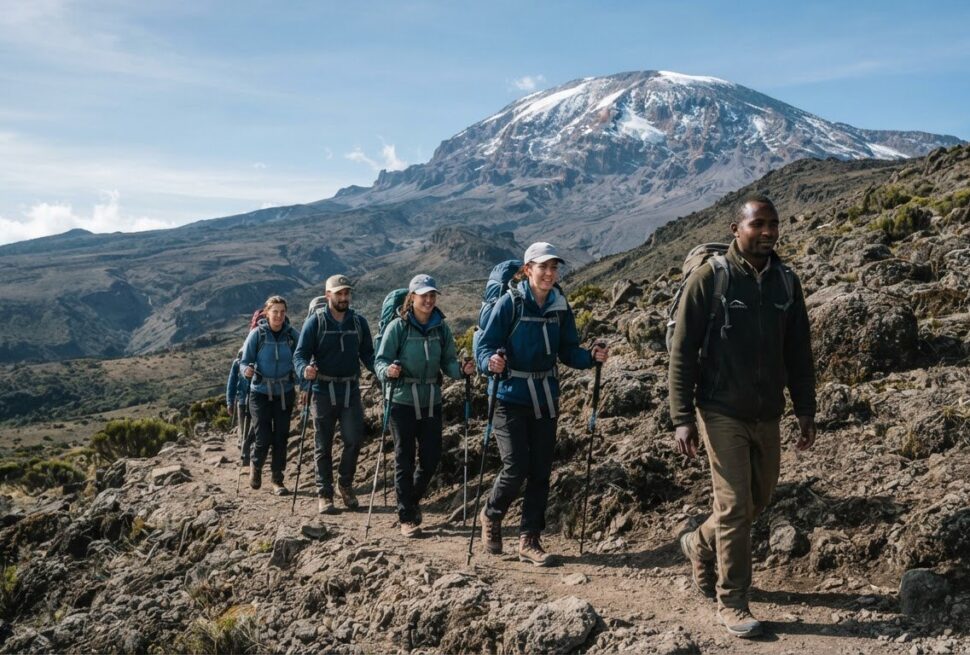
A guided Kilimanjaro trek is a multi-day journey through changing terrain toward Uhuru Peak, with steady walking, overnight stops, and a summit attempt. Each day takes you to a different elevation and overnight stop. Rather than one continuous push, the climb unfolds in stages: walk, pause, reach camp or a hut, and prepare for the next day. To picture what to expect on Kilimanjaro trek, consider how both the landscape and the effort of walking change as you gain elevation.
Lower down, the trail may feel shaded and enclosed. Higher up, the surroundings can become more open and exposed to changing conditions. The exact sequence depends on your route and itinerary, so no particular view or landscape is guaranteed. The Mount Kilimanjaro Wikipedia page offers further background on the mountain’s geography, climate, and climbing routes.
“Altitude changes the trek beyond the act of walking: it can affect how your body feels and how much energy each day asks of you.” People respond differently, so a familiar pace at lower elevation may feel harder as the climb progresses. Give the journey time to unfold rather than judging it by the first day.
How Kilimanjaro’s landscapes change during the climb
Kilimanjaro National Park protects a mountain where elevation shapes the surroundings. On many routes, lower trails pass through lush vegetation, with damp ground and a canopy that softens the light. Farther up, trees thin out and the terrain opens. You may notice more wind, cooler air, and wider stretches of rock and low-growing plants. These are broad patterns, not promises about specific conditions or views. Route choice, weather, and itinerary all affect what you encounter.
What a guided trek means for a first-time climber
For a first-time climber, a guide gives each day structure. Your guide leads the group and explains the plan, leaving you to focus on walking, taking in the surroundings, and settling into camp. African Hiking Tours And Safaris’ Kilimanjaro climbs include experienced guides and mountain support. The company was founded by professionals who worked as mountain porters and guides, bringing firsthand experience to their understanding of the climb. A guide leads the journey, but no one can promise exactly how altitude will affect you or how the summit attempt will feel.
Explore a guided Kilimanjaro climb with African Hiking Tours And Safaris. Message us on WhatsApp or email us to discuss your trek.
A Typical Kilimanjaro Trekking Day: Walking, Resting, and Reaching Camp
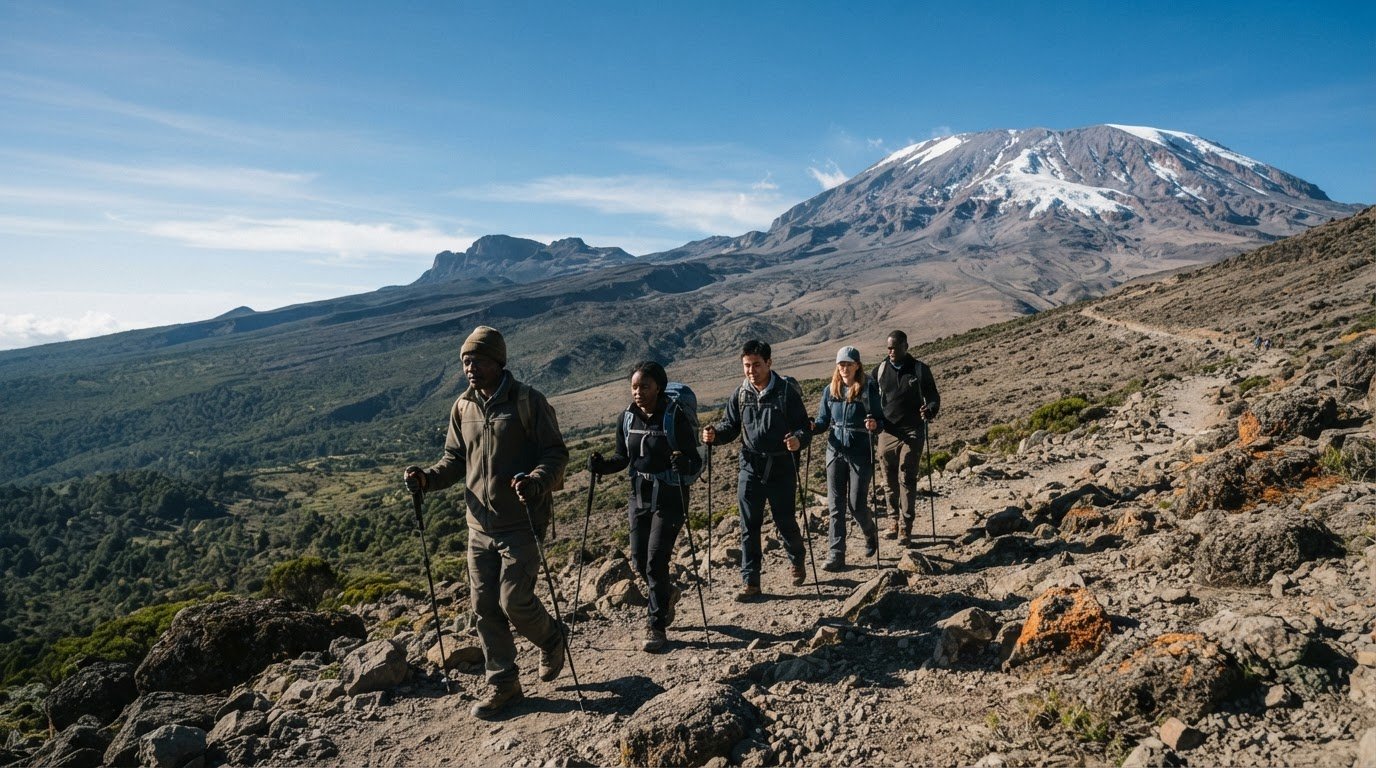
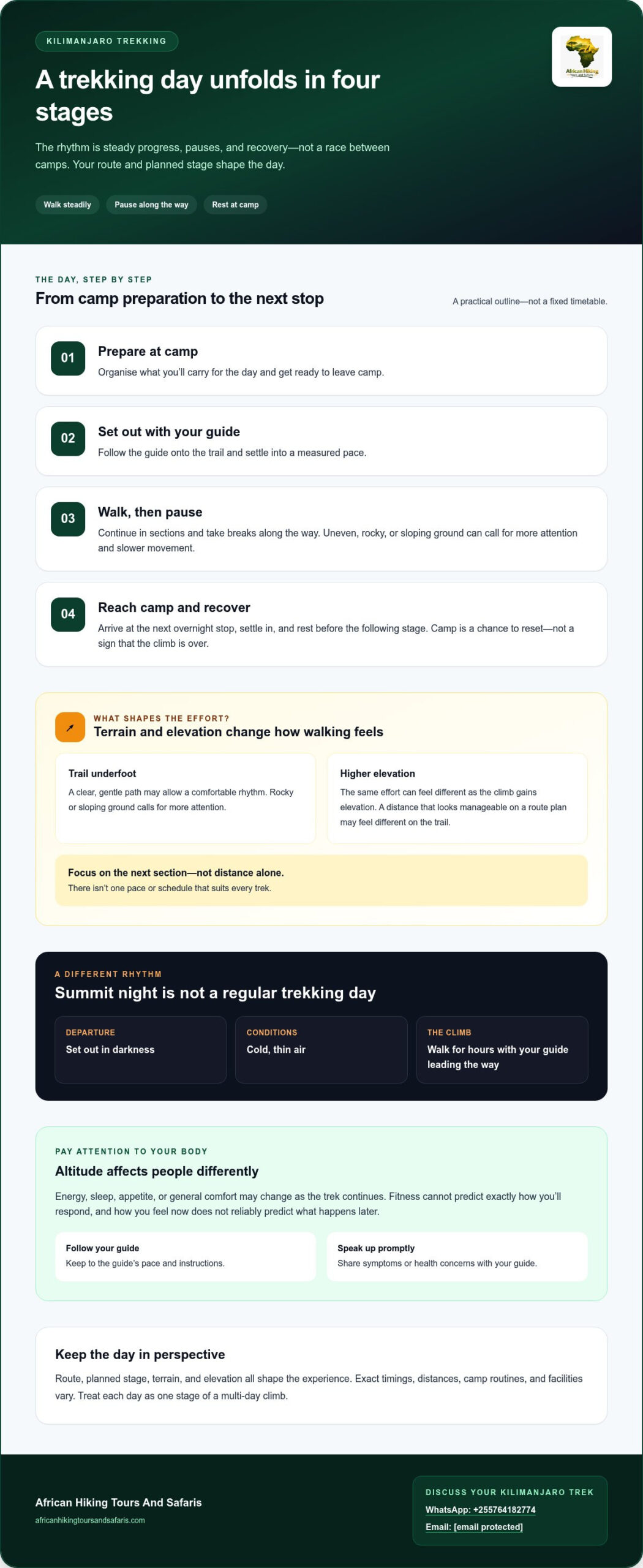
A trekking day usually follows a simple pattern: get ready at camp, set out with the group, walk steadily, pause along the way, and reach the next overnight stop. Exact timings, distances, and routines depend on the route and planned stage, so use this as an outline rather than a fixed timetable. If you’re wondering what to expect on Kilimanjaro trek days, think steady progress, not a race between camps.
- Prepare: Organise what you’ll carry for the day and get ready to leave camp.
- Set out: Follow your guide onto the trail and settle into a measured pace.
- Walk and pause: Continue in sections, taking breaks along the way.
- Reach camp: Arrive at the next stop and make time to rest before the following stage.
What happens between leaving camp and reaching the next one?
The trail may alternate between easier stretches and sections that take more effort. A distance that looks manageable on a route plan can feel different on uneven ground, during a sustained climb, or at higher elevation. Walk steadily, take breaks, and follow your guide’s directions. There isn’t one pace or schedule that suits every trek.
Terrain changes the feel of each step. A clear, gentle path may let you find a comfortable rhythm, while rocky or sloping ground calls for more attention and slower movement. Focus on the next section rather than judging the day by distance alone. Your effort may change as the terrain and elevation do.
What camp life adds to the trekking experience
Camp marks the end of that day’s walking and gives you time to pause, settle in, and prepare for what comes next. The setting and routines depend on the route and itinerary, so facilities and experiences can vary. Treat arrival as a chance to rest and reset, not as a sign that the climb is over.
“A trekking day is a cycle of walking, resting, and recovering for the next stage.” That rhythm is why the climb is approached one day at a time. Some days may feel more demanding than others, and reaching camp is progress even when the summit is still ahead.
Your itinerary shapes these daily stages, but it can’t guarantee how you’ll feel. For a closer look at guided Kilimanjaro trekking options, explore the routes and consider which overall rhythm suits your priorities.
Altitude and Summit Night on Kilimanjaro: What Makes Them Different?
As the climb gains elevation, the same effort can feel different from one day to the next. Altitude affects people individually, and general fitness can’t predict exactly how you’ll respond. You may feel energetic while someone else feels less comfortable, or notice changes in your own energy, sleep, appetite, or general comfort as the trek continues. These changes don’t reliably predict what will happen later in the climb.
For a realistic sense of what to expect on Kilimanjaro trek days at elevation, pay attention to how you feel rather than assuming your usual walking ability tells the whole story. Follow your guide’s pace and instructions, and promptly share any symptoms or health concerns with them. If you have an urgent health concern, seek help from a qualified medical professional. A guide’s leadership and mountain support are important, but they can’t guarantee safety or a summit outcome.
How altitude can change the way you feel
At higher elevations, you may notice changes in energy, sleep, appetite, or comfort, but there’s no single response that applies to everyone. Fitness can help with the physical work of walking, yet it can’t tell you exactly how altitude will affect you. Don’t try to keep pace with someone else or push through a concern in silence. Tell your guide promptly if something feels wrong.
Follow instructions and a measured pace as you approach each stage. Explain health concerns clearly, even if they seem small at first, so your guide understands how you’re feeling. General trekking advice isn’t a diagnosis. For urgent concerns, seek qualified medical attention.
What to expect during the summit attempt
The summit attempt differs from ordinary daytime walking. It commonly begins in darkness, and the cold, high elevation, and steady movement can make the climb feel more demanding. Your focus narrows to the trail, your pace, and the next stretch ahead. Move toward the summit with your guide, one step at a time, rather than treating the night like a race.
Reaching the summit isn’t the end of the effort. The descent is part of the demanding summit-day experience and requires continued care and energy. Schedules vary by itinerary, so an hour-by-hour account won’t fit every trek. Let your guide lead and communicate how you’re feeling throughout the day.
Summit night can be a powerful moment, but every climber’s experience is personal. Prepare for a long, focused effort, keeping both the summit objective and the return in mind. If you’re considering a guided climb, message African Hiking Tours And Safaris on WhatsApp or email the team to discuss your Kilimanjaro trek.
How Kilimanjaro Route Lengths Shape the Trekking Experience
Route length gives you a starting point for understanding a Kilimanjaro itinerary: it shows how many days the climb is planned to take and helps you picture its overall rhythm. A shorter itinerary covers the journey in fewer days; a longer one spans more days on the mountain. That difference matters when you’re considering what to expect on Kilimanjaro trek, but duration alone can’t predict your response to altitude or determine your individual result.
What a shorter or longer itinerary can feel like
With fewer days, the stages of the journey are arranged across a shorter itinerary. A longer itinerary spreads the experience over more days. This changes the overall structure, but it doesn’t mean every day feels alike or that a particular duration will suit every climber. Your experience also depends on your personal response, the route, and conditions along the way. Treat the day count as a planning reference, not a promise about how the climb will feel.
The five guided route options at a glance
African Hiking Tours And Safaris offers guided climbs on five routes. Their listed durations are a straightforward starting point for comparing itinerary length:
| Route | Listed duration |
|---|---|
| Marangu | 6 days |
| Machame | 7 days |
| Shira | 7 days |
| Lemosho | 8 days |
| Northern Circuit | 9 days |
The table compares duration, not difficulty or likely outcomes. Routes with the same number of days are still different itineraries, and a longer schedule doesn’t guarantee that you’ll feel comfortable or reach the summit. Consider how much time you want to set aside, then explore what each route involves.
If you’re weighing the options, consider which guided itinerary fits your priorities. [Explore Kilimanjaro route options](https://Kilimanjaro Route), or message us on WhatsApp or email us to discuss your trek.
What to Expect From a Guided Kilimanjaro Trek, and Your Next Step
A Kilimanjaro climb brings together several experiences: walking over multiple days, crossing changing terrain, stopping at camps, adapting to altitude, and making a summit attempt. The pace and feel of each stage can shift, so approach the climb as a journey rather than a single test of endurance. This gives you realistic expectations while leaving room for your own experience.
Guided leadership gives the journey a steady point of reference. Your guide leads the group and shares the plan for each day, while mountain support helps make the climb possible as a guided experience. That support matters, but it doesn’t promise a particular summit result or make every day feel the same. Your response to the route and elevation remains personal.
What the operator’s mountain experience brings to the journey
African Hiking Tours And Safaris was founded by professionals with experience as mountain porters and guides. That firsthand background informs the team’s understanding of the mountain and the work involved in a climb. It brings practical context to the way the company leads guided treks, with respect for the people and environment that make the journey possible. Experience is valuable, but it isn’t a guarantee of safety or success.
You’ll have experienced leadership alongside you as the trek moves from one stage to another. Ask questions, listen to the day’s plan, and share concerns as they arise. A guided experience doesn’t remove every challenge; it means taking the journey step by step with experienced people leading the way.
From imagining the trek to exploring an itinerary
You’ve seen the broad shape of the climb: steady days on the trail, pauses and overnight camps, changing elevation, and a summit attempt that differs from ordinary walking. The next step is to compare itineraries against your priorities. Consider how many days you can set aside and what overall rhythm feels right. Duration is one part of the decision, not a prediction of how your body will respond or what outcome you’ll reach.
The Machame Route seven-day itinerary is one option. Use its duration as a starting point, then compare it with the other routes discussed earlier. Each itinerary has its own sequence of trekking days, and choosing one is a personal decision based on your plans and preferences.
If you’re ready to explore a guided Kilimanjaro itinerary, reach out to the team. Message African Hiking Tours And Safaris on WhatsApp at +255764182774 or email africanhikingtoursandsafaris@gmail.com to start a conversation about your climb.
Take the Next Step Toward Your Kilimanjaro Trek
Now that you have a clearer picture of what to expect on Kilimanjaro trek, turn that understanding into a plan. Think about the time you can set aside, the kind of daily rhythm you’re comfortable with, and what you hope to take from the journey. You don’t need every detail settled before exploring your options. A conversation can help you focus on the questions that matter to you.
Explore the guided itineraries and consider which one fits your priorities. Explore guided Kilimanjaro treks, message us on WhatsApp at +255764182774, or email our team to take the next step.
The mountain asks for patience, preparation, and a willingness to meet each day as it comes. Start planning with a clear head, take it one step at a time, and let the journey begin.
Frequently Asked Questions
Is Kilimanjaro suitable for first-time trekkers?
Yes, beginners do take on guided Kilimanjaro climbs, but it’s still a multi-day physical challenge at high altitude. Being fit can help with walking, but it can’t predict exactly how you’ll feel as elevation changes. For a clearer picture of what to expect on Kilimanjaro trek days, plan for steady effort rather than a guaranteed summit. Consider how you manage consecutive active days, and tell your guide about any concerns.
What happens on a Kilimanjaro trek if I feel unwell?
If you feel unwell, tell your guide promptly and describe what has changed rather than waiting to see if you can push through. This gives them a chance to respond within the trek’s arrangements. Take health concerns seriously, even if you’re unsure how significant they are. Reaching the summit is never more important than your wellbeing, and no particular response or outcome should be assumed.
Can you shower during a Kilimanjaro trek?
Don’t assume you’ll have access to a shower on the mountain. Facilities depend on the route and itinerary, so arrangements can differ. Treat this as a mountain journey and plan for personal comfort without relying on shower access each day. Review the trip-specific information before setting out so your expectations match the facilities and arrangements for your itinerary.
Is there mobile phone signal on Mount Kilimanjaro?
Mobile signal on Mount Kilimanjaro can vary with location and conditions, so continuous coverage isn’t something to count on. You may be unable to send a message at some points of the trek. Before setting out, let family or friends know you’ll be away from reliable connectivity and that replies may be delayed. Agree on how you’ll update them when you have an opportunity.
Can you charge a phone or camera during a Kilimanjaro trek?
Charging a phone or camera depends on the itinerary and its arrangements, so don’t plan on being able to recharge every day. Review the trip-specific information before departure, then conserve battery by limiting unnecessary screen use and switching devices off when you aren’t using them. If you’re carrying a camera, decide in advance which moments matter most so you can use its power thoughtfully.
Do you see wildlife while trekking on Kilimanjaro?
Wildlife sightings are possible but never guaranteed; what you might see varies with the route, habitat, and conditions. Kilimanjaro is primarily a mountain trek, not a wildlife safari, so treat any encounter as an unplanned bonus rather than the focus of the climb. Observe respectfully and follow your guide’s directions. Flexible expectations help you stay focused on the mountain experience.
How long does a guided Kilimanjaro trek take?
Listed guided trek durations range from six to nine days: Marangu takes six days; Machame and Shira take seven; Lemosho takes eight; and the Northern Circuit takes nine. These figures describe the trekking itinerary, not your total international travel time. No duration suits everyone. Use the comparison earlier in this guide to weigh the day count against your priorities.
Ready to plan your guided Kilimanjaro trek? Message African Hiking Tours And Safaris on WhatsApp at +255764182774 or email africanhikingtoursandsafaris@gmail.com to discuss your itinerary.